Tuesday, September 11, 2012

Casco Bay, Portland, Maine

looking back at Portland
We took the Casco Bay Lines "Mailboat Run" on our visit to Portland. The 3 hour long trip brings mail, passengers and freight to the islands; Little Diamond, Great Diamond, Long, Cliff and Chebeague.
common tern
There were lots of gulls and terns, fabulous scenery and great photo ops!
double-crested cormorant taking off, running, across the water
common terns
I don't envy this boat owner's clean-up job! Maybe the terns didn't care for the boat's name, "Osprey"!
laughing gull
laughing gull
common loon
lighthouse and a profile rock

Sunday, September 9, 2012

Scarborough Marsh, part 2

Least Sandpiper
More pictures from our visits to Scarborough Marsh. I love this place, if I lived in Maine, I'd be here everyday.
Semipalmated Sandpiper
Least Sandpiper preening, Semipalmated Plover in center
Lesser Yellowlegs
Semipalmated Sandpipers
Least Sandpiper
Double-crested Cormorants
Mallard
Eastern Phoebe
Lesser Yellowlegs
Herring Gull flies across a photo-shopped moon!

Friday, September 7, 2012

Scarborough Marsh

 We visited friends in Maine a couple weeks ago and stopped at Scarborough Marsh for some birding. This is Maine's largest salt water marsh, covering 3100 acres. It's an amazing place for birds. Here's some of the ones we saw. I'll post more photos in the next blog.

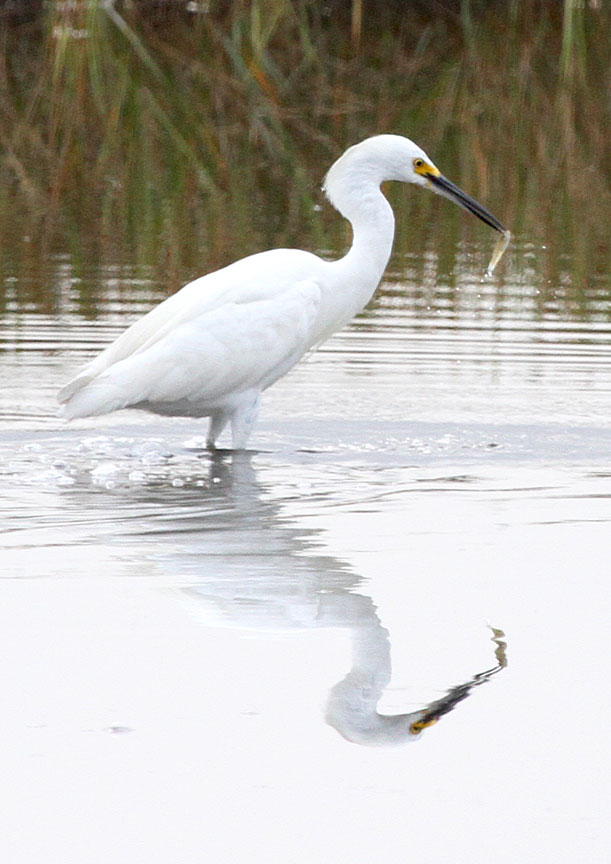
Snowy Egret
 
Tricolored Heron on the left - Snowy Egret on right.
Tricolored Heron
A Northern Harrier was scanning the marsh for food. 

Glossy Ibis
This Forster's Tern was a nice find!
Great Egret
Merlin
action shots of the Merlin


Friday, August 31, 2012

American Kestrel, Still a Falcon But Not Related to Hawks Anymore!


Kestrels

  The American Ornithologists' Union (AOU) published its new checklist of North American birds with lots of changes! The most talked about in my circle is the repositioning of falcons. Long believed to be related to hawks, DNA evidence has now shown them to be closer relatives to parrots and songbirds (passerines)!
  According to the AUO site: "Parrots (Psittaciformes) and Passeriformes (Passerines) are are now believed to be each others' closest relatives, and sister to Falcons & Caracaras (Falconiformes). Believe it or not, hawks (Accipitriformes) are not closely related to falcons, despite the apparent similarity, and falcons are technically closer to Ruby-crowned Kinglet or House Sparrow!"

female Kestrel
 In Vermont, our falcons include kestrel, merlin, peregrine and the very rare gyrfalcon. We've been counting migrating nighthawks (not hawks either but this isn't new) and Gerry captured some great pictures of the resident kestrels.

kestrel
I'm sure we'll continue to count falcons along with the hawks and other birds of prey when we participate in the Putney Mountain Hawkwatch starting in a few days.
kestrel
Stayed tuned for more pictures of our Maine trip!

Wednesday, August 22, 2012

Common Nighthawk - or is it a Kite?

Last night we counted over 200 Common Nighthawks migrating along the CT River in Westminster Station. Gerry was armed with his camera and took many shots as they flew by, some circling above us catching insects on the fly.

It wasn't until this morning when he sorted through the 100s of shots, that he noticed one bird with string hanging from her wing and tail. None of us watching the nighthawks noticed one flying oddly or for that matter, one with string attached.

Is it fishing line? That seems like a strong possibility. Luckily for this bird it didn't affect her flight on this night.
click on the pictures for a closer look.

Sunday, August 19, 2012

Common Nighthawk Migration

Common Nighthawk - male
   It's that time of year when Common Nighthawks are starting to migrate to their winter homes in South America. This bird has one of the longest migration routes of any North American migrant. We have our favorite spot in Westminster Station to watch the birds as they fly south following the path of the Connecticut River. Dusk is the best time to catch them flying in small flocks.

Common Nighthawk - female
     They are not hawks, but members of the nightjar family, which includes the whip-poor-will. These night-flying, aerial insectivores have large mouths with bristles that helps them catch insects. This night, a flock of about 10 birds flew directly overhead, circling around and around, gleaning insects.

     There has been a general decline in the number of Common Nighthawks in North America. They don't build a nest, instead, laying eggs on bare ground (sand, dirt, gravel or rock) or flat roofs (made with gravel) in urban settings. Reasons for the decline could include habitat loss, pesticide use and migration hazards. In cities, changes in roofing substrate may be a factor

Friday, August 3, 2012

Birding Allen's Marsh


glossy ibis
A Glossy Ibis had been spotted at Allen's Marsh in Westminster.........the day I left for a trip!
Common in marshes along the Atlantic coast, we don't see many in Vermont. So as soon as I returned, Gerry and I raced down to the marsh, but we dipped (birding slang for missing the bird you're after). The next morning we returned again only to dip again. But perseverance prevails! We went back about 6 pm.and shortly after, this first-fall ibis flew in.

glossy ibis
Marsh Wren
Another unusual bird for this marsh, surprisingly, is the marsh wren! They were pretty vocal and we sighted a couple working their way in the grasses.

Virginia Rail
Virginia Rails are pretty common in marshes but rarely seen. Two were "talking" to each other last night, "kidik kidik" and the other would answer "kidik kidik".  They were right next to the road and even though they were really loud, they blended in so well, it took a while to finally see them.

American Black Ducks
synchronized flying!
the avian Olympics!
Green Heron
Great Blue Heron
huge flock of European Starlings