Wednesday, May 22, 2013

Herrick's Cove Wildlife Festival

  
  Every year on the first Sunday in May, Ascutney Mountain Audubon Society, The Nature Museum and VT Fish and Wildlife sponsor the Herrick's Cove Wildlife Festival. This was the 14th year! It's definitely a family oriented event with lots of activities for children but also lots of interesting stuff for adults too!

We found over 50 species on Don Clark's bird walk which starts at 7am. Here's a yellow-rumped warbler.

Michael Clough with the Southern Vermont Natural History Museum is always entertaining.

Eastern Screech-Owl (red morph)

American Kestrel
Barred Owl
VINS (Vermont Institute of Natural Science showing off a Red-tailed Hawk.

There's lots of exhibits with plenty of interesting material.

Locked moose antler exhibit. Click on this link to find out how this happened.
locked moose
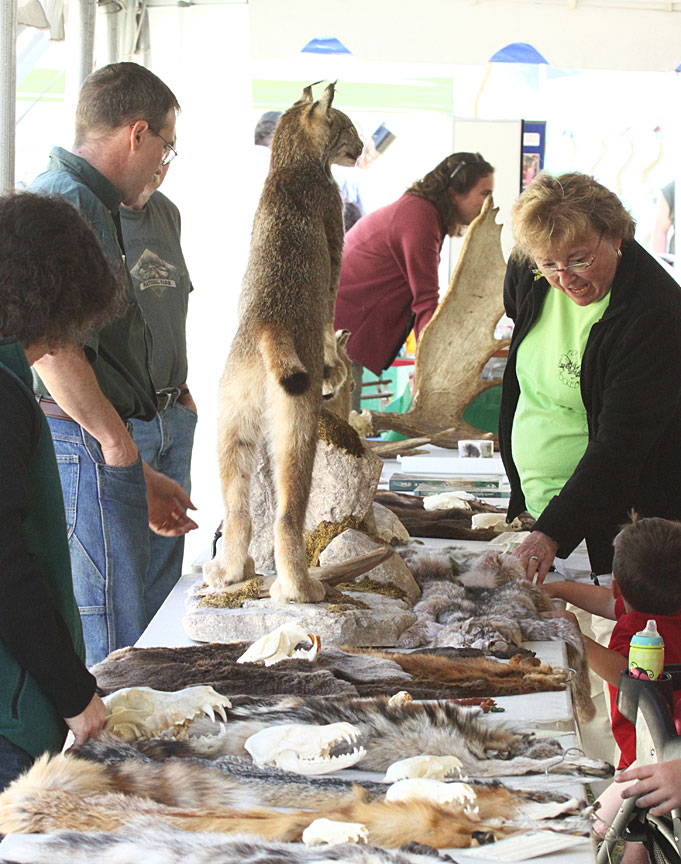
Here I am checking out Chris Petrak's wonderful bird photography. Here's a link to his blog: tails of birding

Phil Morgan has bird themed back-scratchers.


What's better to do on a sunny day than talk about solar!


All sorts of celebrities come to the festival!

And what's a festival without good food. Hope to see you next year!

Thursday, April 18, 2013

Getting Goosed!

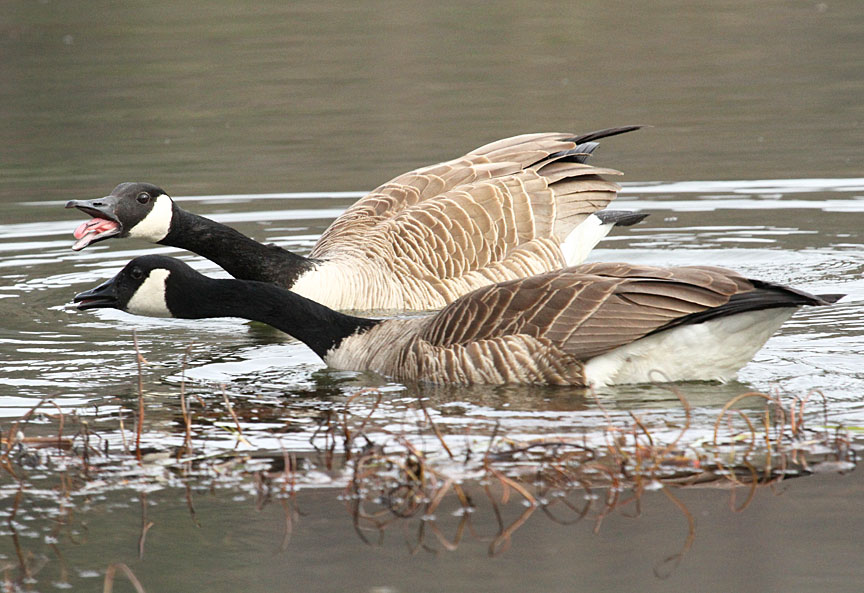
I never noticed a goose's tongue before. Look at the tooth-like projections which, along with the serrated edges of the bill, help cut grass and plant material when they are grazing.


This guy is not too happy with intruders in his territory. A few Canada geese landed in the marsh that has a nesting pair. The local goose flew over to chase them out. Honking all the way!! He looks like he's doing some crazy dance moves.


He eventually gave up and swam back to his mate, having given the intruders a good "tongue lashing".

Sunday, April 14, 2013

Eurasian Wigeon!!


 This is what the flooded farm field looked like when we surveyed the waterfowl. If you look left of center, you'll see a small bit of orange. That's the head of a Eurasian Wigeon!


The Eurasian wigeon is an infrequent visitor to both coasts of North America. Those that visit are probably from Iceland and eastern Siberia. It's not very common to see one along the CT River, but we found one in Charlestown, NH yesterday.
 
 
 He is very similar to our American wigeon in size and shape. Both have a short bluish-gray bill with a dark tip and a white forehead and crown but the European visitor has an orange head.

American wigeon

Wigeon were once called "baldpate" because the white stripe on their crown looks like a bald man's head.
.
Eurasian wigeon and mallard

American wigeon and ring-necked duck


He was following around a female wigeon. Unfortunately female Eurasian and American wigeons are hard to tell apart. 


Tuesday, April 9, 2013

Turkey Vultures

 I found lots of interesting facts about turkey vultures on an Audubon site! Enjoy!

A turkey vulture can smell carrion from over a mile away! They have the largest olfactory (smelling) system of all birds.

They are also the only scavenger bird that can't kill it's prey. But, they do have an amazing beak that can tear through even the toughest hide.

  Vultures prefer meat as fresh as possible and won't eat extremely rotted carcasses. They can smell carrion less than 12-24 hours old.

During the hot summer months turkey vultures will defecate on their feet to cool them off. If a turkey vulture is disturbed or harassed, it will throw up on whoever is bothering it. Even the vulture babies will do this! I guess that just goes with the territory!

Turkey vultures can swoop up to 60 mph in order to avoid being "mobbed" by ravens or jays. They also have excellent eyesight and can spot dying or recently dead animals from high in the air.

There's a couple ways to identify a turkey vulture when in flight. From a distance, it looks like a big bird without a head. They also teeter side to side while soaring because of their light weight. With a wing span of over 5 feet, you'd think this bird would weigh more than just 2 to 4 pounds.

  Because of their light weight, turkey vultures can virtually float in the sky using the thermal currents (rising columns of air) to get around the skies. This technique uses very little energy as the vultures rarely need to flap their wings.
 
  Turkey vultures do not actually build a nest. They are known to nest in very remote, hard to reach locations. Just as well, you wouldn't want to come across a nest only to get vomited on!

   In the early morning hours you may see turkey vultures sunbathing in a tree with their wings spread out in a horaltic pose. This is most likely done to increase their body temperature after the cool night.

  And here's the last interesting fact, even better than the vomit one. Groups of perched vultures are called a wake. Seems obvious, doesn't it!